
AI workloads on an unlimited token budget
An essay on long agent runs, full-repository prompts, API costs, and the access restrictions that an unlimited token budget would leave unresolved.
Every morning I check my API balance before I check my email. The reflex is simple: read the meter, then decide whether the task earns the spend. That is what this daydream is about — staged on old scaffolding from Charles Dickens (A Tale of Two Cities, 1859) and Shakespeare (Hamlet, around 1600), borrowed without a second thought and far safer than my bank balance.
It was the best of times, it was the age of the meter
It was the spring of one-million-token context windows, it was the winter of the fifty-dollar output price. Every first of the month, my balance refills like the tide; every long agent run pulls it back out to sea. Dickens was writing about London and Paris. I am writing about a number on a dashboard that only ever moves in one direction.
Time is free. Tokens are not. That is the entire poem.
To batch, or not to batch
To batch, or not to batch, that is the question: whether it is nobler in the mind to suffer the throttles and quotas of outrageous pricing, or to take arms against a sea of rate limits — and by topping up, end them.
If infinite tokens landed in my account tomorrow, I have three errands ready.
First, I would let Claude Fable 5 run at full stretch. Anthropic says the model can sustain “days-long, complex, and asynchronous tasks” that earlier models could not1. I have only ever dared to think about workloads like that — a run dying halfway because the balance hit zero feels worse than never starting. With infinite tokens, it runs to its natural end.
Second, I would make ultra the default on GPT-5.6 Sol. The setting coordinates four agents in parallel out of the box, and OpenAI’s own evaluations push as far as sixteen2. Until now, clicking that toggle required a deep breath and a quick mental multiplication. No longer.
Third, I would stop slicing my repositories. Kimi K3 ships with a one-million-token context window3. No chunking, no retrieval scripts, no ranking heuristics. Push the whole repo in and let the model find what it needs.
A context window left empty is a goblet left unfilled. That is a translated proverb, and I stand by it.
Some tokens money cannot buy
Sober up for a second, and the wish has two layers.
The first layer is money. Manageable, and also not:
Table 1: API pricing per 1M tokens 123
| Model | Input | Input (cache hit) | Output | Context |
|---|---|---|---|---|
| Claude Fable 5 | $10.00 | $1.00 | $50.00 | 1M |
| GPT-5.6 Sol | $5.00 | $0.50 | $30.00 | 1M |
| Kimi K3 | $3.00 | $0.30 | $15.00 | 1M |
(Cache-hit prices for Fable 5 and GPT-5.6 reflect the official 90% prompt-caching discount12. Moonshot says its API sustains a cache hit rate above 90% on coding workloads3.)
The same million output tokens costs $50 from Fable 5 and $15 from K3 — more than a threefold spread, but real money either way.
The second layer is whether money is even accepted. On June 12, the US government imposed export controls on Fable 5 and Mythos 5, drawn along nationality lines, and Anthropic suspended access for everyone; the controls lifted on June 30 and service resumed on July 14. For nearly three weeks, no sum of money could purchase a single Fable 5 token.
So the price tag is the smaller half of the wish. “Always available” is the larger half.
Infinite, with a cover charge
The plot twist arrived today.
On July 16, Moonshot AI released Kimi K3: 2.8 trillion parameters, the first open 3T-class model, with full weights landing on July 27 under a Modified MIT license35. Its self-reported scores mostly beat Claude Opus 4.8 and GPT-5.5, trailing only Fable 5 and GPT-5.6 Sol6.
Self-hosting changes the unit economics of the daydream: the marginal cost of a token drops from “dollars per million” to electricity and GPU depreciation. This is the closest an ordinary developer gets to infinite tokens.
The cover charge deserves a mention, though: Moonshot recommends a supernode with 64 or more accelerators to serve K33. Infinite is real. So is the door fee.
The rest is metering
Daydream over. July 27 is circled on the calendar — the day K3’s weights ship. Until then: check the balance, watch the meter, keep taking that deep breath before toggling ultra.
At least this week, all three models are at the table. Fable 5 is back in stock, GPT-5.6 Sol just went generally available, and Kimi K3 opened its doors today1423.
The rest is silence. The rest, for now, is still metering.
References
Footnotes
-
Anthropic Official Announcement — Claude Fable 5 and Mythos 5 launch: $10/$50 per million tokens, days-long task capability, 90% prompt-caching discount; official platform docs confirm a 1M-token context window https://www.anthropic.com/news/claude-fable-5-mythos-5 https://platform.claude.com/docs/en/build-with-claude/context-windows ↩ ↩2 ↩3 ↩4
-
OpenAI Official Blog — GPT-5.6 family launch: Sol at $5/$30 per million tokens, ultra mode with 4 parallel agents by default, up to 16 in evaluations https://openai.com/index/gpt-5-6 ↩ ↩2 ↩3 ↩4
-
Kimi Official Tech Blog — Kimi K3 launch: 2.8T parameters, 1M-token context, $0.30/$3.00/$15.00 pricing, weights on July 27, 64+ accelerator supernode recommendation https://www.kimi.com/blog/kimi-k3 ↩ ↩2 ↩3 ↩4 ↩5 ↩6
-
Anthropic Official Announcement — Redeploying Fable 5: June 12 export controls, June 30 lifting, July 1 service restoration https://www.anthropic.com/news/redeploying-fable-5 ↩ ↩2
-
CryptoBriefing — Kimi K3 launches with 2.8 trillion parameters, open weights dropping July 27 under a Modified MIT license https://cryptobriefing.com/kimi-k3-open-weights-july-27/ ↩
-
Simon Willison — Third-party analysis of Kimi K3: self-reported benchmarks mostly above Opus 4.8 and GPT-5.5, behind Fable 5 and GPT-5.6 Sol https://simonwillison.net/2026/Jul/16/kimi-k3/ ↩
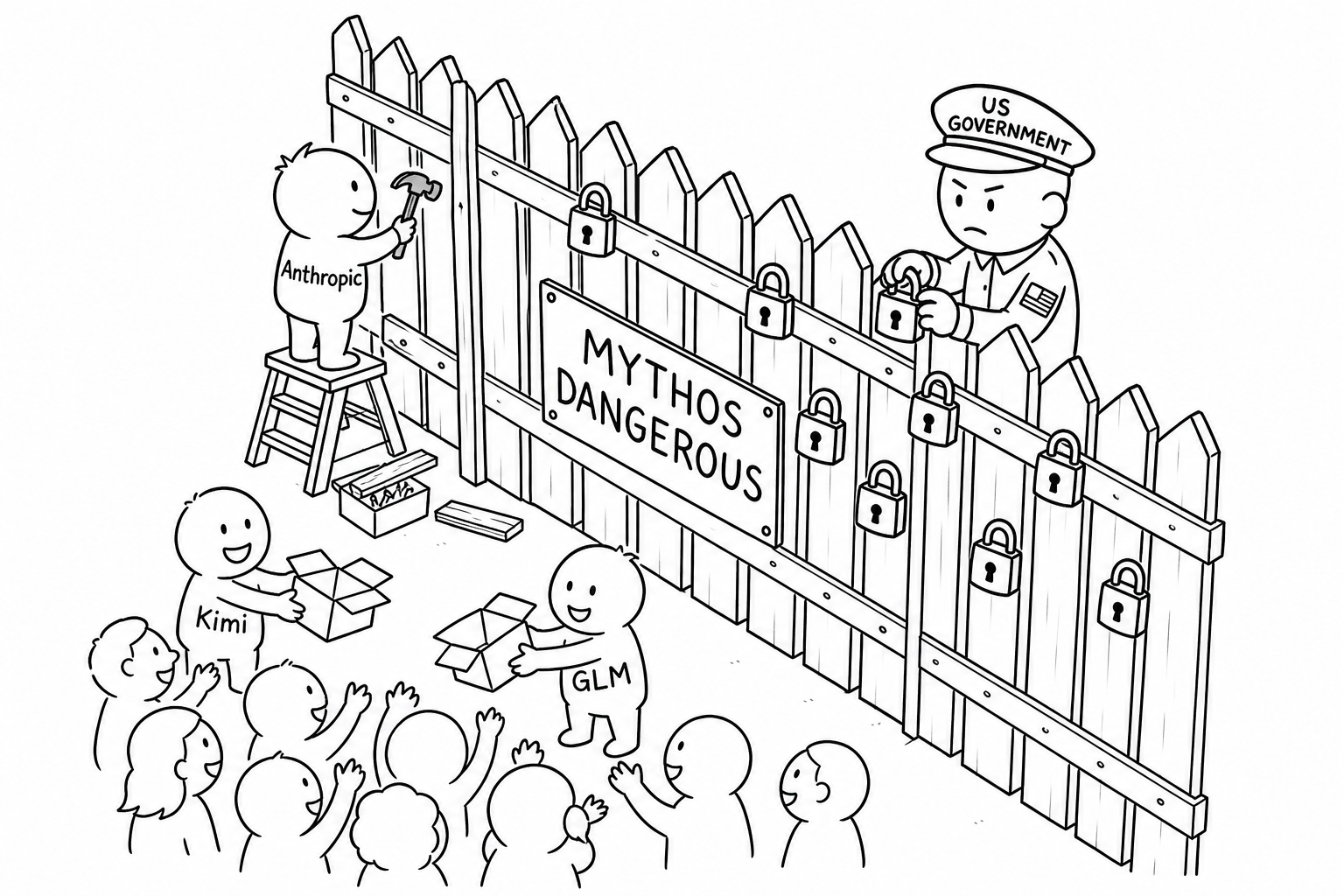
US export controls restrict access to Anthropic's Fable 5 and Mythos 5
US export controls restrict Fable 5 and Mythos 5 by nationality, while Kimi K2.7 and GLM-5.2 make weights available for download.

DeepSeek makes V4-Pro's 75% discount permanent
V4-Pro's permanent API prices undercut several providers hosting the same open-weight model. Cached-input pricing also affects costs for agent workloads.

PHP’s disclosure dispute and the responsibility to users
Rejecting a social contract does not resolve a publisher’s responsibility to users still waiting for a usable fix.
Subscribe via RSS
Copy the feed address below and add it to your RSS reader.
Add this address to your RSS reader to receive new articles.